
Shawano County Court Docket Search
Shawano County Court Docket searches are usually direct because the county office sits right on Main Street in Shawano and the court system uses the same statewide public search tools as the rest of Wisconsin. The main local wrinkle here is mandatory e-filing, which changes how filings enter the system and makes the docket trail more digital than paper-heavy. If you know a party name or case number, you can see the public case path quickly, then use the county office when you need a copy, a filing answer, or help understanding what the docket line means. That makes the search efficient and local at the same time.
Shawano County Court Docket Search
Start with Wisconsin Circuit Court Access. The portal gives you the public docket view for circuit cases statewide, including Shawano County. You can search by case number, party name, business name, or attorney name, which is enough to find most public records without a courthouse visit. For Shawano County, that is especially useful because the docket often tells you whether a filing has already moved into the system or whether you still need to check with the clerk for a more current answer. The public screen is the fast path.
The local e-filing rule matters here. The research notes that mandatory e-filing started on May 1, 2017, and that attorneys and high-volume filers must e-file, with the 10-plus-cases-per-year threshold triggering the requirement. That affects how Shawano County records show up in the system. A newer filing is more likely to appear electronically, and the docket trail may be more complete for users who are checking status after a filed document. The clerk office still manages the record, but the path into the record is more digital than in some counties.
Shawano County Records
Shawano County Clerk of Courts Ethan Schmidt is listed at 311 N. Main Street in Shawano, WI 54166. That office is the local place to ask for copies, filing guidance, and confirmation of what the docket view is showing. The mandatory e-filing rule means the clerk’s office is working with a more digital record stream, which is useful when you want the docket to stay current. It also means the office may be the best place to ask if you are unsure whether a paper filing, an e-filed document, or a later notice is the source of the docket entry.
Image source: Shawano County Legal Resources.
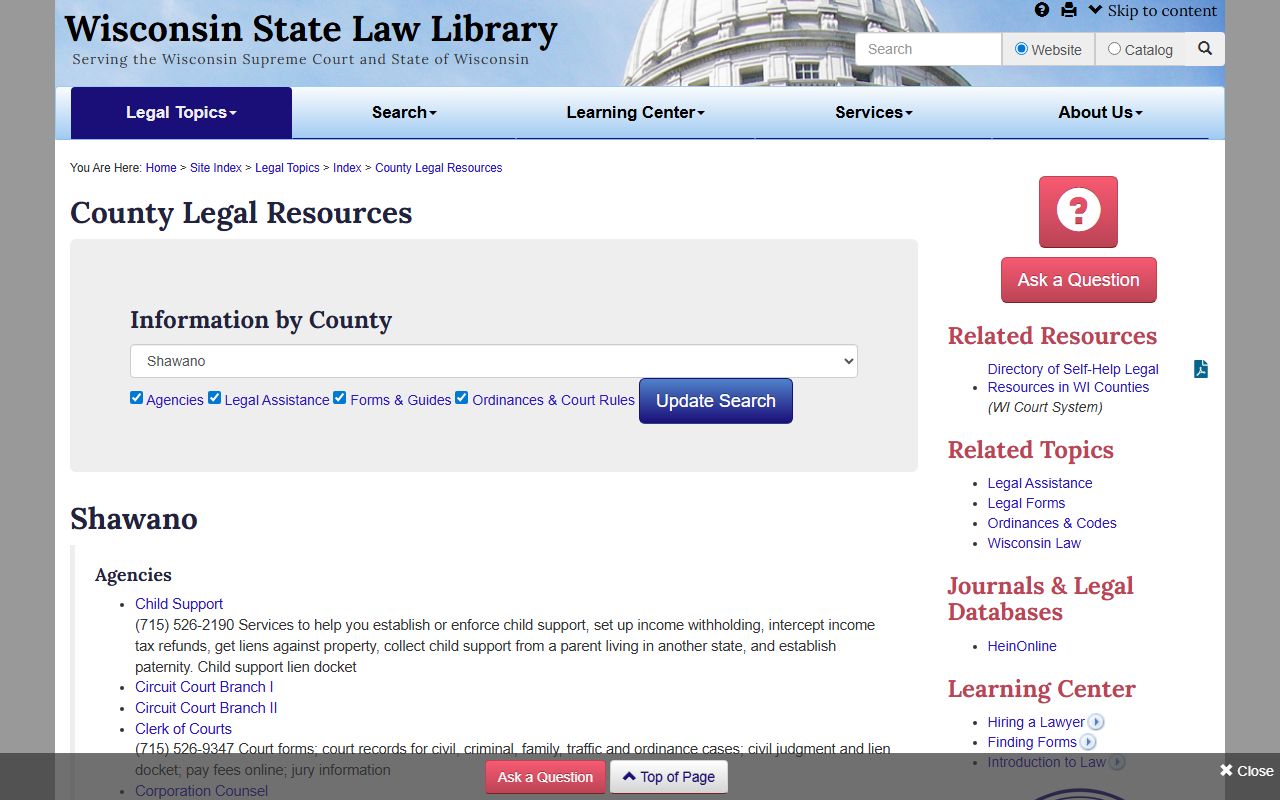
This image points back to the county legal resources page and gives Shawano County users a local law-library starting point that fits well with the county clerk office and the e-filing system.
Shawano County works well for a user who wants a docket trail and a local office trail at the same time. E-filing makes the record process easier to track, but it also means you should not assume every case event is obvious from one screen. The clerk office can help fill in the gap when the docket needs a local explanation.
Shawano County Court Docket Copies
Copy fees follow the statewide Wisconsin fee rule in Wis. Stat. § 814.61. That gives Shawano County the same copy and certification baseline used elsewhere in the state. If you want a plain copy, the cost is lower. If you need a certified document, the total is higher. The clerk can explain the final amount once the office knows what you need. Because the county has a strong e-filing setup, it is worth asking whether the document you want already exists in the digital record before you assume paper retrieval will be needed.
When you request a record, keep the ask specific. Give the party names, the case number if you have it, and the document title if you need one item rather than the whole file. Shawano County’s mandatory e-filing makes the search step easier in many cases, but the copy request still needs to be clear. A docket search tells you which case is active. A copy request tells the clerk what should come out of that case. Those are different tasks, even when they happen close together.
If you are handling a recent case, ask whether the filing is already in the e-filed system or whether the office needs time to sync it. If you are handling an older one, ask whether the case is stored locally or archived. That small bit of detail can save a lot of back-and-forth in a county where the record stream is increasingly digital. The clerk can usually tell you which part of the process you are dealing with.
Open Records and Retention
Wisconsin open records law in Wis. Stat. § 19.31 explains why Shawano County Court Docket information is usually available to the public. The rule says access should be the default, so most ordinary docket data is open unless a legal restriction applies. That does not mean every document is public. Sealed records, juvenile records, and some protected case types still have limits. But the docket itself is often enough to confirm a case and decide what the next step should be.
Wisconsin Supreme Court Rule 72 tells clerks how records must be maintained and how long they are kept. That matters in Shawano County because the e-filing structure makes digital retention especially important. Electronic records can be maintained when backed up and secured properly, which helps the county keep the public record accessible while reducing the need for paper circulation. If an older file is archived, the rule still supports the idea that the record survives and can often be retrieved.
For users, the key point is simple. Public access and retention are linked. One tells you what you can see. The other tells you how the court stores and preserves it. When a docket line is public but a document is not, the clerk can explain the difference. When an older file is not sitting at the counter, the clerk can tell you whether it is archived, electronic, or pending retrieval. That is normal in Wisconsin record work.
Shawano County Court Docket Help
If a Shawano County Court Docket search leads to a criminal case and a person needs counsel, the Wisconsin State Public Defender is the statewide office for eligible representation. If the question is statewide criminal history data, the Wisconsin Department of Justice Crime Information Bureau is a separate resource. Those offices are helpful, but they are not the same as the county clerk or the docket search portal. Each one serves a different part of the process.
Shawano County is a good example of why a docket search alone is not always the full answer. The county office can confirm whether a filing was e-filed, whether a copy is available, and what the office needs from you. The portal can confirm whether the case exists and what the public docket says. The public defender and DOJ resources are for different follow-up questions. If you keep those roles separate, the process is easy to manage.
The best path is still the same. Search the docket, identify the office, and then ask for the exact document or status answer you need. Shawano County is well suited to that kind of direct approach.