
Lafayette County Court Docket
Lafayette County Court Docket records sit at the courthouse in Darlington, and the county makes the clerk contact path easy to find. If you are checking a civil case, a small claims file, a family matter, a criminal docket, or a traffic case, the county gives you a good mix of office names and phone lines to work from. That is useful because a docket search often turns into a request for a judgment, a lien, or a certified copy. The county also participates in WCCA, so you can use the public system first and then move to the courthouse when the summary is not enough.
Lafayette County Court Docket Search
The county participates in Wisconsin Circuit Court Access, so a Lafayette County search starts with the statewide docket view. That is the fastest way to check whether a case is open, closed, or still moving through the circuit court. The county handles civil, small claims, family, criminal, and traffic cases, so WCCA can help you sort the case before you contact the clerk.
The research also gives you the courthouse location at 626 Main Street, Darlington, WI 53530. That address matters because the docket trail in Lafayette County sits inside the courthouse, not in a separate records annex. If you are trying to chase a judgment, a construction lien, or a divorce record, the courthouse contact is the right next step once the public search gets you close.
Lafayette County is a good example of a place where the search can be simple but still deserves care. A name search may lead to multiple case types. A party name plus a rough filing year often narrows the field enough to make the next call worthwhile.
Lafayette County Clerk Office
The clerk of circuit court is Trisha Rowe, and the office phone is (608) 776-4832. The circuit court phone is (608) 776-4811, and the office hours run Monday through Friday from 8:00 AM to 4:30 PM. Those basics matter when you are planning an in-person records visit or a follow-up call after a docket search.
The research also names Chief Deputy Heather Blosch and Legal Assistant Alex Meekma. That is helpful because a docket request does not always go to the same person. A narrow question about a file, a hearing, or a copy can be routed faster when you know the office structure. The county courthouse is not a huge maze, but the right name still helps.
Other contacts in the courthouse network include the County Clerk, District Attorney, Child Support, Register in Probate, Register of Deeds, Sheriff, and Coroner. That tells you Lafayette County keeps court work close to the rest of county government. A docket search can move quickly when the office map is clear.
Note: Lafayette County office hours are limited to weekday business hours, so plan your call or visit before the afternoon ends.
Lafayette County Court Docket Records
The research notes that the clerk handles civil, small claims, family, criminal, and traffic cases, along with judgments, construction and other liens, criminal records, and divorce records. That broad mix means Lafayette County docket work is not just about one court file. It can move through a chain of records that all matter for the final answer.
That is where a focused request helps. If you already know the case type, say it. If you need a judgment or lien, say that instead of asking for everything in the file. If you are looking for divorce records, remember that the docket may lead to a case summary first and a file copy second. The clerk can tell you which is which.
The county also has the courthouse staff names in the research, which is useful if you are trying to match a file to the right desk. In a small county, the person who answers the phone often knows whether the record is a quick pull or a longer search.
Lafayette County Court Docket Images
The Lafayette County legal resources page at the Wisconsin State Law Library is the image source tied to the county manifest record.
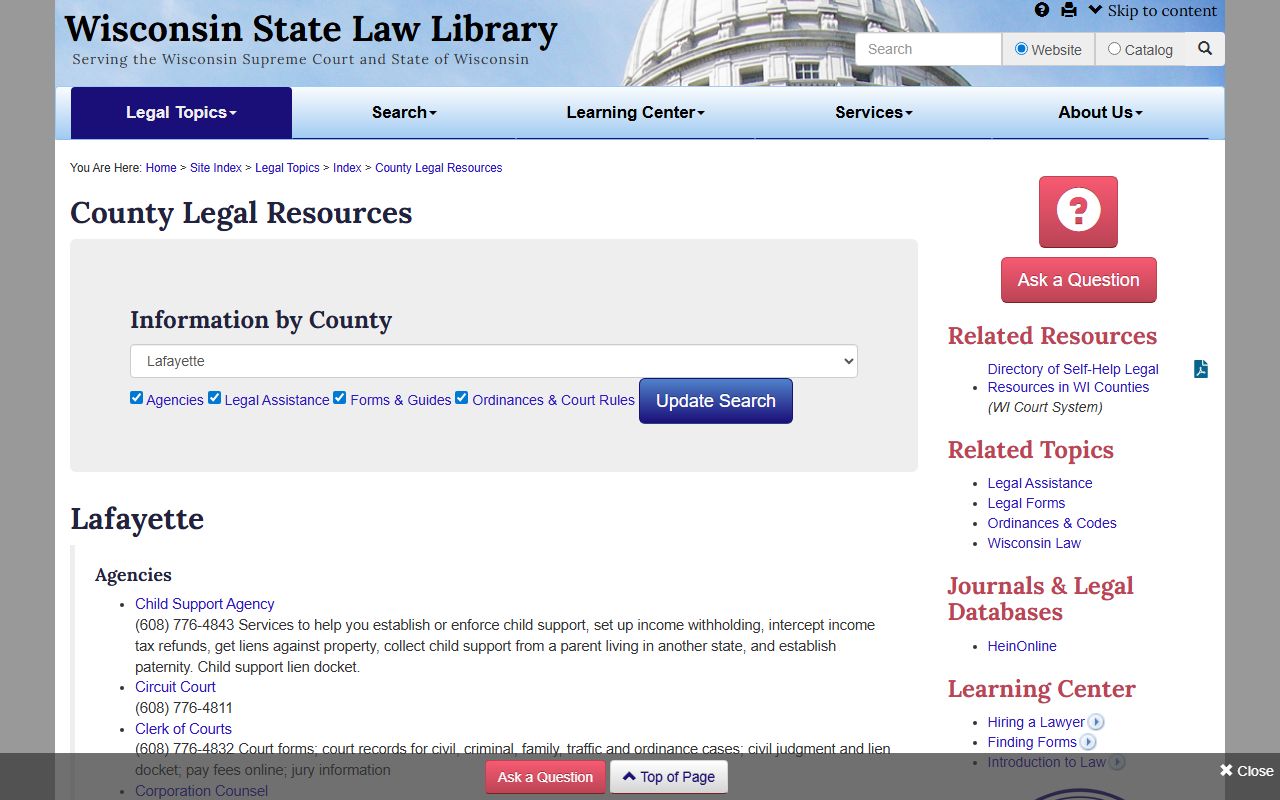
It gives you a county-level way to keep court docket research tied to official legal resources.
Open Records and Court Docket Rules
Lafayette County access follows Wis. Stat. § 19.31, which says public access is the rule. That matters because most docket searches begin with the public summary and then move to the local office only when the file needs a closer look. The law sets the tone for open records across the state.
Wisconsin Supreme Court Rule 72 handles retention. The rule explains why some case types last a long time and why others do not. Electronic records are allowed, but they still need backup and security. In practice, that means a Lafayette County docket may be online, in paper form, or both.
For a records user, that is the useful part. The county office tells you where the file is. The state rules tell you why it may look the way it does. Put those together and the search gets easier to trust.
Note: A docket summary can be public even when the clerk still has to review the full file for release limits.
Lafayette County Court Docket Help
The Director of State Courts supports the statewide court system that Lafayette County works inside. That office helps explain why the county docket follows a common structure for records, jury work, and court operations. The local search may feel small-town, but the framework is statewide.
If your docket search turns into a criminal case question, the Wisconsin State Public Defender is the state office for defense representation issues. If you are checking criminal history instead of a court file, the Department of Justice Crime Information Bureau and WORCS are the separate tools. They do not replace WCCA, but they do answer a different question.
The statewide referral line at 1-800-362-9082 is a practical backup when you have the docket but still need a lawyer referral. That is often the cleanest next move after a records search, especially in family or criminal matters.
Lafayette County Contacts
Lafayette County’s courthouse network gives you a long list of useful points of contact. The research includes the county clerk, district attorney, child support, register in probate, register of deeds, sheriff, and coroner. That matters because each office can sit next to a different part of the record trail. A docket entry can lead into support, probate, or law enforcement work fast.
The staff list is also useful for records questions. Trisha Rowe, Heather Blosch, and Alex Meekma give the clerk office a clear human map. In a county this size, that can make the difference between a first call that lands and one that does not. If the case is old or unusual, a named contact can be the fastest route.
Lafayette County Court Docket Summary
Lafayette County Court Docket searches work best when you start with WCCA, then move to the courthouse for the copy or judgment you actually need. The county gives you the address, the office hours, and the staff names, which makes the next step easier to plan. The broad case mix is real, but so is the clear office path.
Once you add the statewide open records rule and retention rule, the docket becomes more than a case name on a screen. It becomes a record trail with a local office and a state framework behind it. That is the cleanest way to search Lafayette County.