
Racine Municipal Court Docket
Racine Court Docket searches usually begin with the city municipal court because that court handles the city ordinance side of the record and keeps the process tied to citations, hearings, and payment deadlines. Racine also has a busy parking workflow and a separate police records path for incident reports, so the search can move in more than one direction. If you are trying to find a court date, a citation status, or a way to reopen a default, the municipal court page is the right first stop. If the matter becomes a circuit appeal, Racine County takes over.
Racine Court Docket Overview
Racine Municipal Court is at 800 Center Street, Room 115, Racine, WI 53403. The phone number is (262) 636-9263, the fax number is 262-636-9110, and the judge is Hon. Rob Weber. The court sessions are held on Tuesdays and Thursdays, and the court handles non-criminal municipal ordinance violations rather than a full criminal docket. That is why Racine Court Docket records are usually about traffic, parking, first-offense OWI if adopted by the municipality, underage alcohol, building code, disorderly conduct, trespass, animal control, and truancy matters.
The court also says it is not a court of record, which means the records are summary records and appeals proceed de novo to circuit court. That distinction matters if you are hoping for a full paper file in the same way you would expect from a county circuit docket. In Racine, the city court tells you what the citation is doing now, while the county court becomes important if the matter is appealed or if the record has to move out of the municipal track.
Because the court is busy and many cases are scheduled in batches, the notice or citation is the thing that usually determines how you have to respond. That makes the municipal docket useful even before you show up at the building.
Searching Racine Court Docket
The city court process starts with the citation. At the first appearance you can plead guilty, no contest, or not guilty. If you choose not guilty, the city schedules a pretrial meeting with the city attorney. That pretrial is where evidence can be discussed and a settlement can be reached before trial. If no agreement is reached, a trial is scheduled before the judge. The court also allows point reduction discussions for traffic citations at the pretrial or first appearance, which is another reason the Racine Court Docket is tied so closely to the hearing calendar.
Parking citations have their own deadlines and their own tracking path. A registered owner must request a court appearance within 28 days of the citation date, and late payment or failure to contest can trigger state registration problems. The city parking ticket page explains the payment methods, the drop box, the contest deadline, and the contact number for questions. If the parking matter is your only record, the parking page may be the quickest way to see whether the case still has an open payment or contest window.
Racine also keeps a public records path for police reports and incident copies. That is not the same as the municipal court docket, but it matters when you want the report behind the citation. The records bureau requires in-person requests and reviews the reports before release, so the city record path can lead you into both court and police workflows at once.
Racine Image Guide
The municipal court page at cityofracine.org/municipalcourt/ is the main starting point for Racine Court Docket searches because it shows the court office, judge, and hearing rhythm.
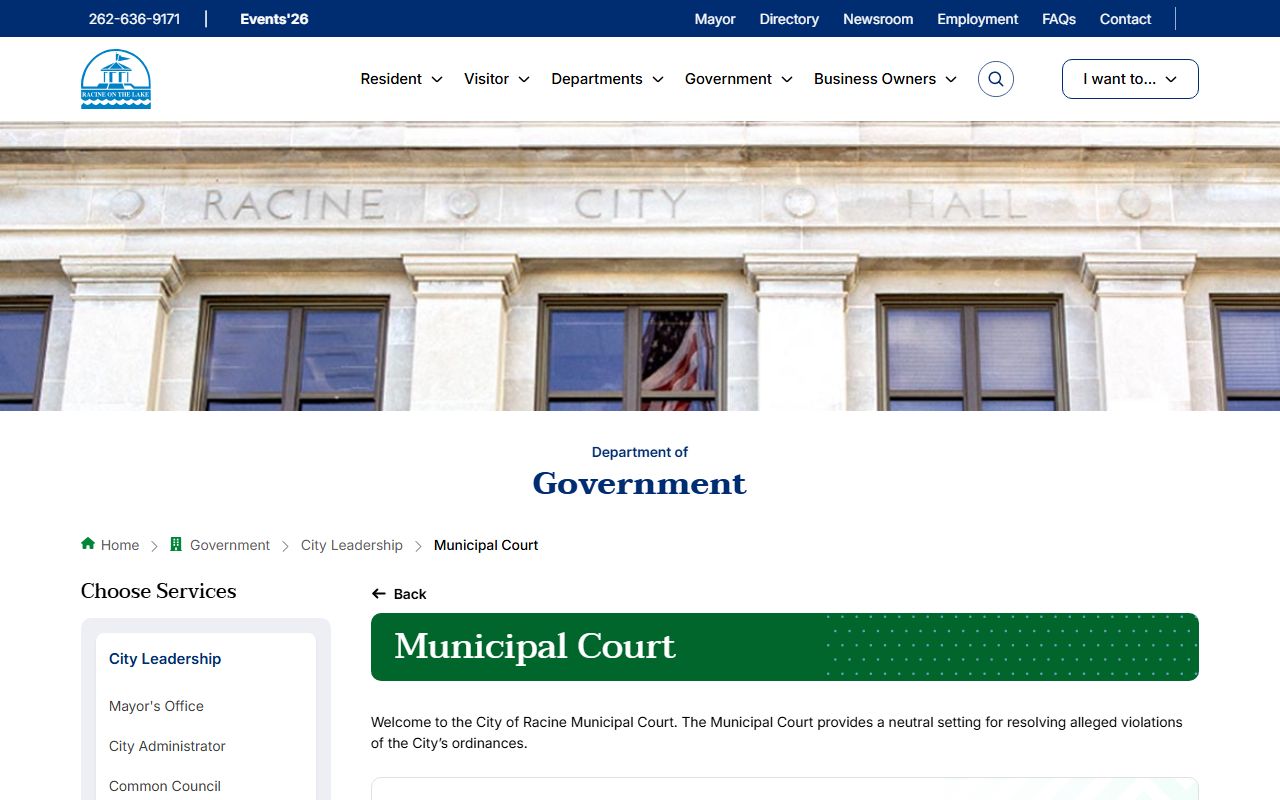
That page helps you connect a citation to the city court before you move into a plea or payment question.
The FAQ page at cityofracine.org/municipalcourt/faq/ is helpful when a Racine Court Docket question is really about what happens after a missed date or how the court treats a default.
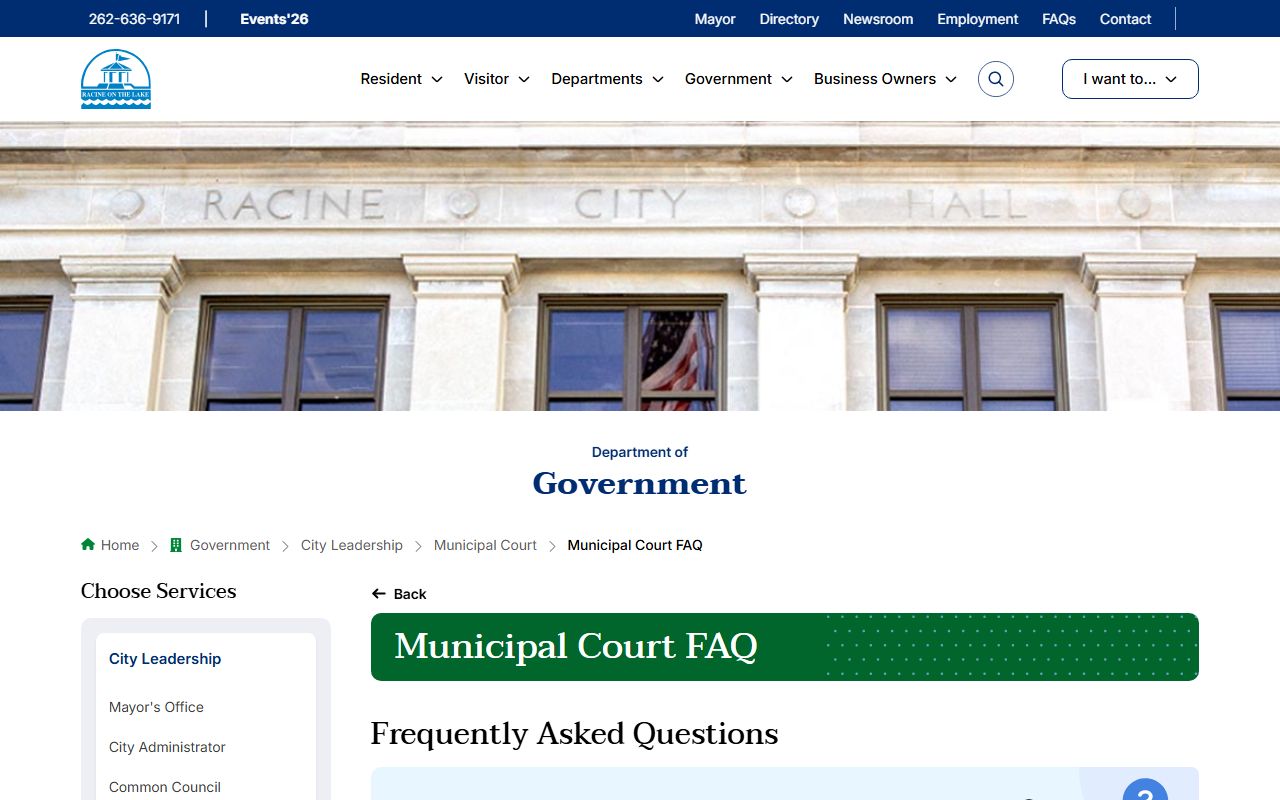
That image is a good reminder that Racine's court process is more procedural than a simple one-page citation search.
The parking ticket page at cityofracine.org/police/parkingtickets/ is the quickest visual path for Racine Court Docket users who need to know whether a parking citation has been paid or contested.
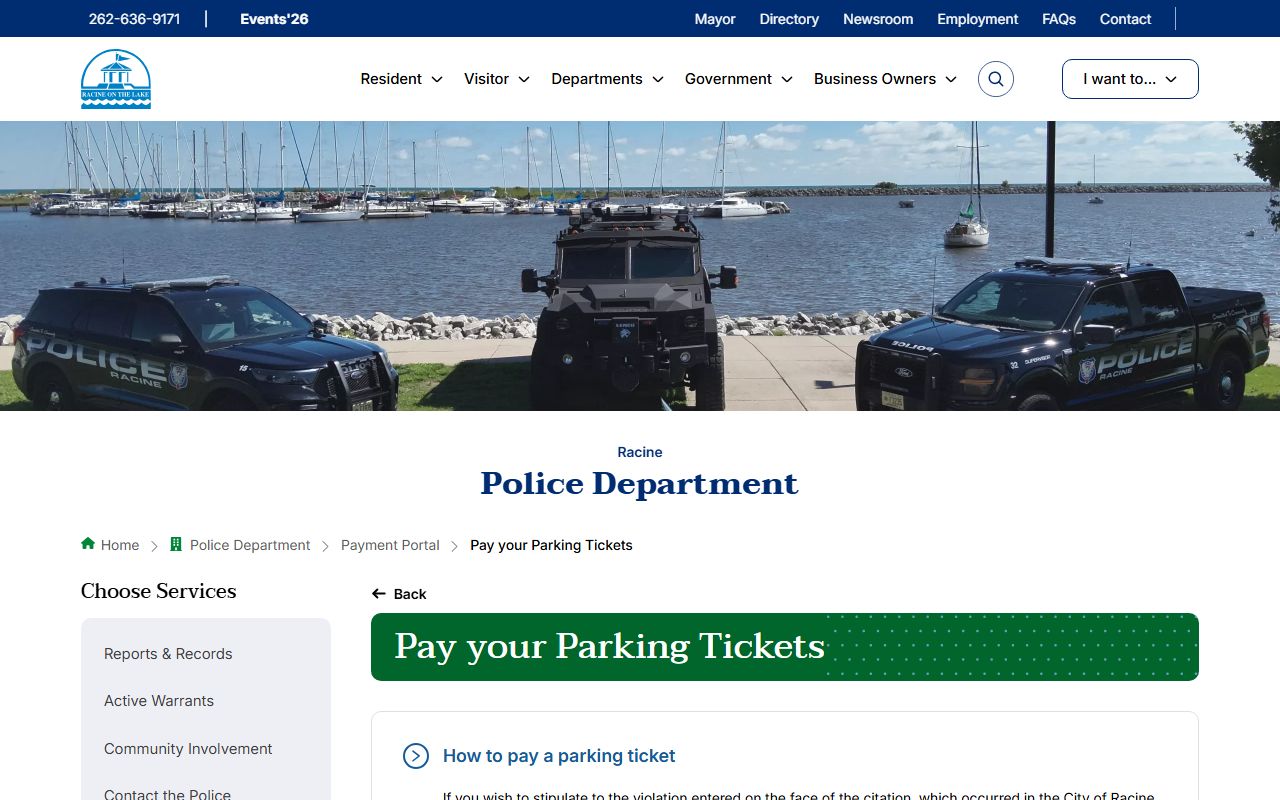
It connects the parking process back to the city's court system and police records workflow.
Racine County Records
If a Racine municipal matter turns into an appeal or a circuit issue, Racine County becomes the next stop. The county circuit court is at 730 Wisconsin Avenue, the law library page at wilawlibrary.gov/topics/county.php?c=Racine&a=a&l=l&f=f&r=r gives you a county legal starting point, and the county circuit court pages explain the larger record system. Racine County also has the District II Court of Appeals, which is the next layer if the case moves beyond the circuit court.
Racine Court Docket searches can therefore move from city ordinance to county appeal without ever changing counties. That is useful because a de novo appeal means a new hearing in the circuit system, not just a review of the city paperwork. The city court handles the summary record, while the county court handles the appealed matter. If you are trying to understand where the file lives after a ruling, that line is the one that matters most.
The county resources also point to the clerk, the sheriff, the district attorney, and the victim and witness program. Those offices become relevant once the case leaves the municipal calendar and starts moving through the county criminal or appellate process.
Racine Court Docket Requests
Racine Court Docket requests are easiest when you know whether you need a plea change, a payment, a new hearing date, or a copy of a report. The city allows a not guilty plea by mail, online, or in person, and that gives you options if you cannot appear on the scheduled date. If you miss the appearance, the court may enter a no contest plea after roughly two weeks, and after that you may have to file a motion to reopen the judgment. The FAQ page explains that step clearly, which is why it is so useful for default cases.
Police records requests are separate from court requests and must be made in person. The records bureau reviews reports before release and can tell you whether a report is available before you visit. That is important because some Racine Court Docket users need both the municipal case and the police incident behind it. When both are needed, it helps to treat the court file and the police report as two related but different records.
The cleanest path is to use the municipal court for the citation, the parking page for parking matters, the police records bureau for reports, and the county court only if the matter leaves the city court. That keeps the Racine Court Docket search focused and prevents wasted trips.