
Find Madison Court Docket
Madison Court Docket searches are centered on the city municipal court, which handles ordinance cases and related city citations in a more compact workflow than the county circuit court. The city court pages are useful when you need a court date, want to confirm what kind of violation was issued, or need to move from a citation to a plea or payment. If the matter turns into a county record, Dane County takes over. That means a Madison search often starts in one place and finishes in another, but the first step is usually the city court portal because it gives you the cleanest path to the citation itself.
Madison Court Docket Overview
The City of Madison Municipal Court is at 210 Martin Luther King Jr. Blvd., Room 203, Madison, WI 53703. The office phone is (608) 264-9282, and the public email is municipalcourt@cityofmadison.com. Judge Daniel P. Koval hears the city ordinance docket, and the court describes itself as a neutral setting for those cases. The courtroom is in Room 201, while arraignment court is at the Public Safety Building on West Doty Street, so Madison Court Docket users need to pay attention to which building the notice actually names.
The city handles a wide range of ordinance matters, including animal control, building code, disorderly conduct, first offense drunk driving, health code, parking, traffic, trespass, truancy, and underage alcohol violations. That list matters because Madison Court Docket records are usually about a city citation, not a county criminal file. The court also offers free interpreter services in Spanish, Hmong, and Chinese, and ADA accommodations are available on request. Those support tools make the city docket easier to use if the notice or hearing date is hard to understand.
For a lot of users, the key issue is not whether Madison has a court record. It is how the citation gets from the door to the hearing and then to the payment or plea. That is where the municipal court pages are most useful.
Searching Madison Court Docket
Madison Court Docket users usually work from the citations page and the hearings page because those pages explain the plea path. The court asks people to enter a plea on or before the assigned court date. If no plea is entered, the court can find the defendant guilty. Guilty, no contest, and not guilty all move the case in different directions, and the not guilty path sends the matter to pretrial first. That means the docket is not only a record of what happened. It is also a map of what to do next.
The hearings and trials page explains that some hearings are virtual by Zoom and others are in person when the courtroom is open to the public. Parties can request a virtual appearance by email, and the court allows discovery requests through the city attorney. Madison Court Docket records therefore work hand in hand with the hearing notice and the plea form. If you are trying to answer a citation, you need the docket, the hearing date, and the plea rule together, not one at a time.
The city payments page also matters because the payment timeline is built into the process. Payments are due in 90 days from the original court date, and the court lets people ask for payment plans or community service before the due date. If you already know your citation number, name, or date of birth, the payment system is the fastest way to verify the next step in the docket path.
Madison Image Guide
The main municipal court page at cityofmadison.com/municipal-court is the best first stop for Madison Court Docket searches because it explains the court's role and shows the city court structure.
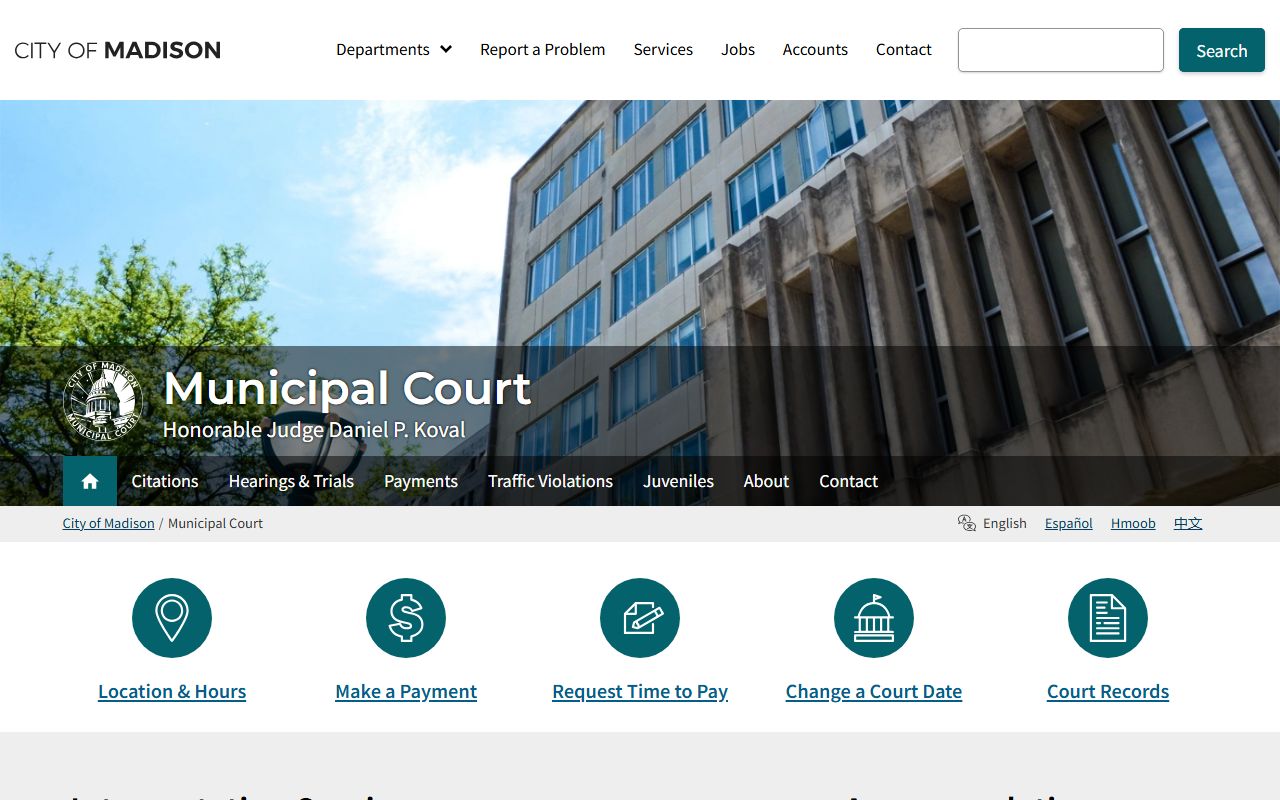
That page is useful when you need to verify the court, the judge, or the kind of case the city handles.
The contact page at cityofmadison.com/municipal-court/contact is a practical Madison Court Docket reference when you need the room number, fax, or office phone before mailing something in.
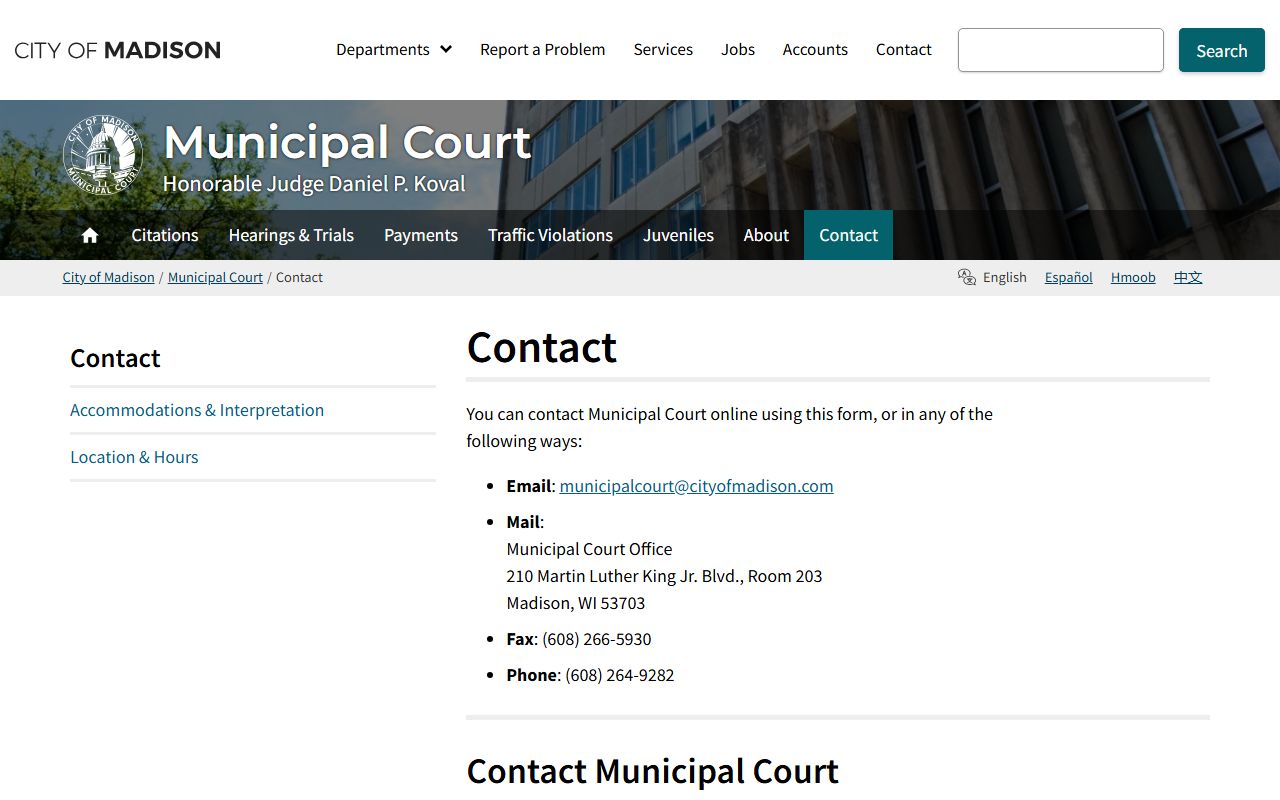
That image is helpful because Madison splits office, courtroom, and arraignment locations across more than one building.
The payments page at cityofmadison.com/municipal-court/payments shows the channels Madison Court Docket users can use when a citation needs to be paid, posted, or routed into a payment plan.
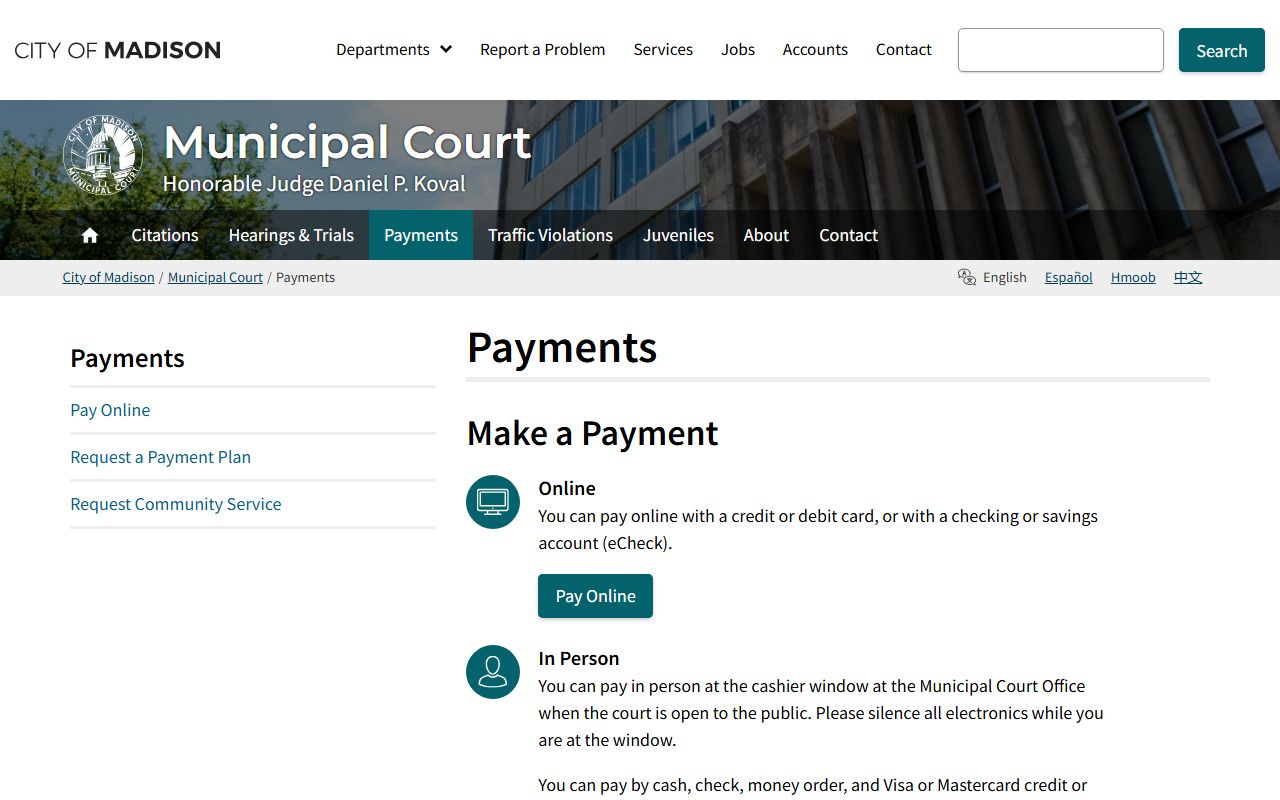
It is one of the clearest ways to see how the city links a citation to a payment workflow.
Dane County Court Records
If a Madison matter moves beyond the city court, Dane County handles the circuit side of the record. The county records center at courts.danecounty.gov/Resources/Court-Records is the right place to start for civil, criminal, family, paternity, small claims, traffic, forfeiture, lien, and probate records. That is especially useful when the city docket points to an appeal or when the record you need is not a municipal citation at all. Dane County also keeps older records in different storage categories, so a search that seems thin online may still have a paper or microfilm path at the courthouse.
Madison Court Docket users should think of the city court and the county court as two layers of the same public-record path. The city pages help you answer a citation. The county page helps you handle a circuit file. When a municipal case turns into a county matter, the county records center is where the more formal court record lives.
That split is important in Madison because the city court handles city ordinance violations only. If you are looking for a county case file or an older record, Dane County is the correct follow-up after the municipal search.
Madison Court Docket Requests
Madison Court Docket requests are built around the citation number, date of birth, phone number, and name. The city payment pages ask for those items so the court can match the money to the right case. If you are mailing something in, the city asks you to write Madison Municipal Court on the envelope, and if you use the dropbox the payment has to be routed to the right office. This is also where the 90-day payment window matters, because missed payments can lead to license suspension, vehicle registration suspension, a collection referral, tax refund interception, or a warrant.
The traffic violations page adds another layer for drivers because demerit points can be attached to guilty findings. The city also explains that people can request payment plans or community service before the due date, which means the docket can change direction before the final penalty is locked in. If you are trying to track the case from notice to final disposition, the city court pages give you the process and the county records center gives you the longer-term file path.
For Madison Court Docket searches, the best result is the one that lets you move from the citation to the correct response without guessing. The city pages and the county records center work together to make that possible.